
Toronto’s climate is notoriously unforgiving for vehicles. Between scorching summers, brutally cold winters, and the unpredictable shoulder seasons, your car faces relentless environmental stressors year-round. Proper car detailing Toronto seasonal guide strategies aren’t just about maintaining that showroom shine — they’re essential for protecting your investment and preserving your vehicle’s structural integrity.
Whether you drive a luxury sedan, high-performance sports car, or everyday commuter, understanding how seasonal changes affect your paint, interior, and protective coatings can mean the difference between a car that looks and feels pristine for a decade and one that shows premature wear. This comprehensive guide breaks down exactly what your vehicle needs during each season in the Greater Toronto Area.
- Winter salt and moisture damage requires heavy ceramic protection and monthly washing cycles
- Summer UV rays cause 35-50% of paint fading if unprotected; graphene coatings offer superior defense
- Spring pollen and bird droppings contain corrosive compounds that etch paint within 48 hours
- Fall leaf debris traps moisture against paint and clear coat, leading to oxidation
- Toronto’s 80+ degree temperature swings create expansion stress on protective coatings
Table of Contents
- Winter Detailing: Battling Salt, Slush, and Sub-Zero Conditions
- Spring Detailing: Recovery and Paint Restoration
- Summer Detailing: UV Protection and Ceramic Coatings
- Fall Detailing: Preparing for Harsh Months Ahead
- Your Year-Round Detailing Schedule
- Professional Detailing vs. DIY Maintenance
- Frequently Asked Questions
Winter Detailing: Battling Salt, Slush, and Sub-Zero Conditions
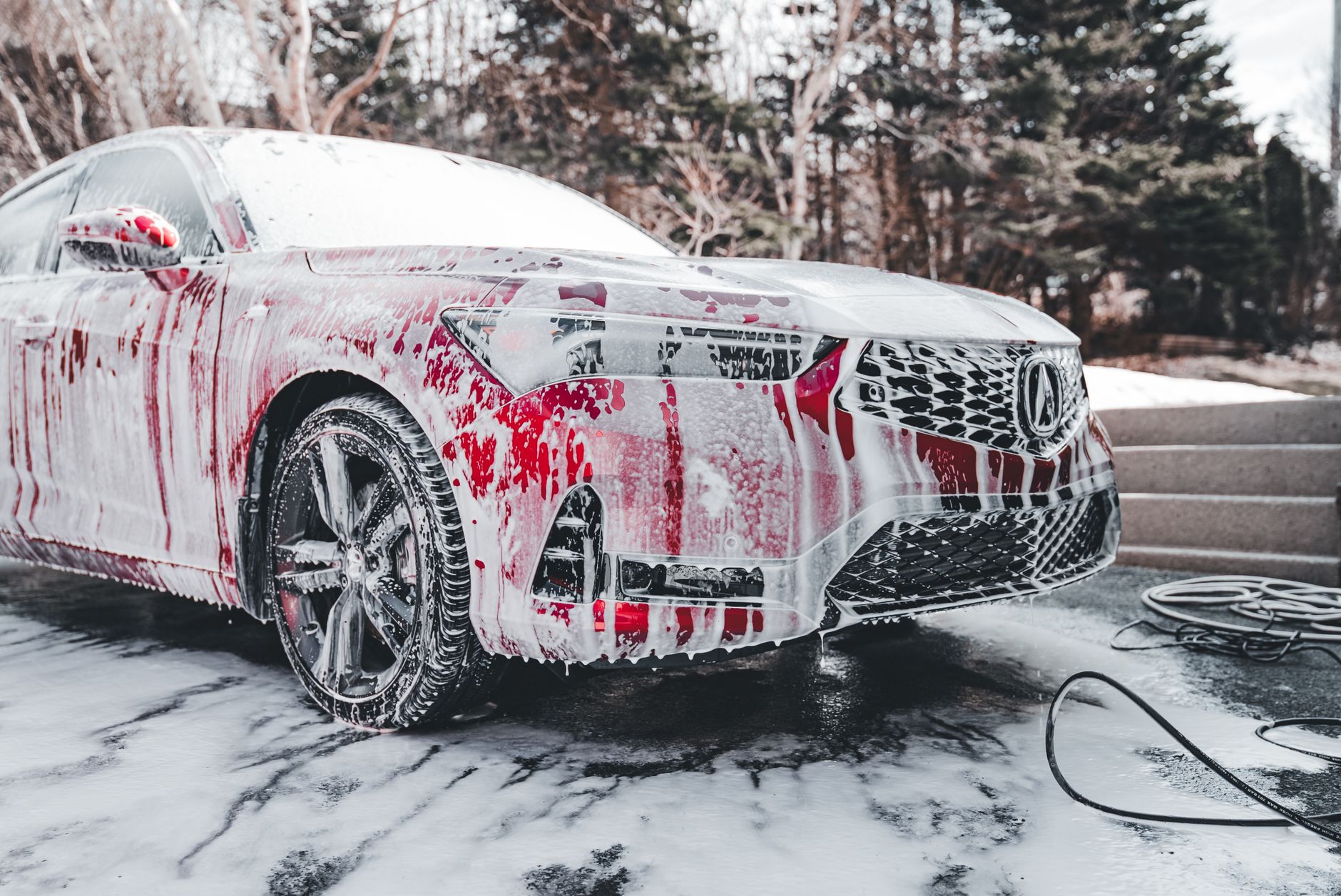
Winter in Toronto runs from December through March, and it’s the most damaging season for vehicle exteriors. Temperatures regularly drop to -10°C or lower, and the Ontario Ministry of Transportation uses approximately 4 million tonnes of road salt annually across the province. This salt, combined with slush and moisture, creates a perfect storm for paint damage, rust formation, and protective coating breakdown.
The Winter Salt Problem
Road salt is hygroscopic, meaning it actively absorbs moisture from the air. When salt deposits accumulate on your vehicle’s undercarriage, suspension components, and painted surfaces, they retain water and create an environment where corrosion accelerates exponentially. Studies show that unprotected vehicles in salt-heavy climates experience 50-70% faster rust development than those in dry climates.
Your paint clear coat is particularly vulnerable. Salt particles act as micro-abrasives, physically scratching the surface while simultaneously promoting chemical oxidation. The damage compounds when temperature fluctuations cause the paint and underlying metal to expand and contract at different rates.
Winter Detailing Essentials
Ceramic and graphene coatings become non-negotiable during winter months. These hydrophobic layers create a barrier between salt, moisture, and your paint. Unlike traditional wax, which breaks down in 4-6 weeks, premium ceramic coatings last 12-24 months and provide superior hardness and chemical resistance.
- Professional ceramic coating application: Creates a 9H hardness layer (harder than most clear coats) that resists salt and chemical damage
- Regular underbody washing: Every 2-3 weeks during winter to remove accumulated salt before it causes rust
- Protective wax topcoat: Monthly application over ceramic coatings for additional water beading and salt resistance
- Interior protection: Salt-laden moisture enters your cabin through door seals; use moisture-absorbing products and floor mats
- Brake dust management: Winter driving produces more brake dust; weekly wheel cleaning prevents brake fluid corrosion
Winter Interior Care
Winter detailing isn’t just about exterior protection. Moisture, salt, and sand infiltrate your vehicle’s interior through door seals, window channels, and the ventilation system. This moisture corrodes interior metal components and creates an ideal environment for mold and mildew growth.
Professional winter interior detailing should include deep carpet extraction to remove salt residue, dashboard conditioning to prevent cracking from heating system use, and air filter replacement to prevent salt-contaminated air circulation. Door jambs and window tracks accumulate significant salt deposits that need specialized cleaning to prevent water leaks.
Spring Detailing: Recovery and Paint Restoration
Spring (April-May) is when winter’s damage becomes visible. Temperatures warm to 10-20°C on average, but the transition causes 40-50 degree daily temperature swings that stress protective coatings. Spring also introduces new contaminants: pollen, tree sap, bird droppings, and insects — each with unique damage mechanisms.
Assessing Winter Damage
Before spring detailing begins, a professional inspection should evaluate paint condition. Clear coat failure, micro-scratches from salt abrasion, and oxidation patches are common after Toronto winters. Paint correction services become essential if your vehicle’s protective coating has been compromised.
Professional detailers use specialized tools like paint depth gauges to measure clear coat thickness and determine the extent of damage. If your vehicle has lost 50% or more of clear coat depth, paint correction through machine polishing is required before reapplication of protective coatings.
Spring Contaminants and Damage Mechanisms
| Spring Contaminant | Damage Type | Time to Damage | Prevention Method |
|---|---|---|---|
| Tree Sap | Acid etching of clear coat; permanent staining | 24-48 hours | Weekly wash; ceramic coating |
| Bird Droppings | Rapid acid corrosion; paint pitting | 12-24 hours | Immediate removal; protective coating |
| Pollen | Acidic film; oxidation acceleration | 7-14 days | Bi-weekly washing |
| Insect Residue | Protein-based etching; organic staining | 3-7 days | Weekly wash; bug remover treatment |
Spring Detailing Service Priorities
Spring detailing should focus on comprehensive paint correction, protective coating reapplication, and contamination prevention. A professional spring detail includes:
- Acid-stripped exterior wash: Remove salt residue, brake dust, and oxidation buildup
- Paint correction: Machine polishing to remove micro-scratches and restore clarity
- Ceramic or graphene coating application: Establish fresh protective barrier before high-contaminant season
- Interior deep clean: Remove salt-contaminated moisture and prevent mold growth
- Convertible top or tonneau cover treatment: Restore water repellency after winter exposure
Summer Detailing: UV Protection and Ceramic Coatings
Summer in Toronto (June-August) brings temperatures between 20-28°C on average, with occasional heat waves exceeding 35°C. While summer seems gentler than winter, the intense UV radiation poses a different threat: UV-induced paint fading and oxidation that degrades your vehicle’s appearance and structural paint integrity.
Understanding UV Damage
The sun’s UV rays break down the polymers in your paint clear coat. Studies indicate that unprotected vehicles in sunny climates experience 35-50% paint fading over 5 years, with UV damage accelerating after the first year. Toronto’s 2,000+ annual sunshine hours make UV protection essential for long-term paint preservation.
UV-induced oxidation appears as a dull, hazy finish that intensifies around panel gaps and trim edges where clear coat is thinner. Once oxidation begins, it’s self-accelerating — the compromised clear coat allows deeper UV penetration, creating a degradation cascade.
Graphene Coatings vs. Ceramic Coatings in Summer
Graphene-infused protective coatings offer superior UV protection compared to traditional ceramic coatings. Graphene’s unique molecular structure provides enhanced light absorption properties, reducing UV penetration by up to 25% compared to standard ceramic. For Toronto vehicles, especially dark-colored luxury cars, graphene coating represents the premium choice for summer protection.
The difference is measurable: ceramic coatings typically maintain clarity for 12-18 months in high-UV environments, while graphene coatings extend this to 24-36 months. The cost premium (typically $200-400 additional) pays for itself through extended protection intervals.
Summer Interior Care and Paint Protection
Summer sun heats your vehicle’s interior to dangerously high temperatures — leather seats, dashboard plastics, and steering wheels can exceed 70°C. This heat accelerates degradation of interior materials and stresses protective coatings on painted surfaces.
Professional summer detailing includes:
- Ceramic-coated windshield application: Reduces solar heat transmission by 10-15% and improves visibility
- Interior UV protective treatment: Leather conditioning and UV-blocking products prevent cracking and fading
- Paint sealant top-up: Refresh ceramic or graphene coating integrity monthly during peak UV exposure
- Tire dressing with UV protection: Summer heat and UV rays degrade tire rubber and sidewall appearance
- Convertible top conditioning: If applicable, UV-protective dressing prevents fading and material degradation
Summer Maintenance Frequency
During Toronto’s summer months, increase your detailing maintenance cadence. Wash your vehicle weekly to remove UV-degrading contaminants like tree pollen, atmospheric fallout, and bug residue. Monthly professional touch-ups or protective sealant reapplication extend the life of ceramic and graphene coatings by 30-40%.
If you have a luxury vehicle, high-performance sports car, or collector car, consider professional detailing services every 3-4 weeks during summer to maintain optimal protection and appearance.
Fall Detailing: Preparing for Harsh Months Ahead
Fall (September-November) transitions Toronto toward winter with temperatures dropping from 20°C to near-freezing. This season introduces unique challenges: falling leaves, moisture accumulation, and temperature fluctuations that stress protective coatings. Fall detailing serves as critical preparation for winter’s salt assault.
Fall Contaminants and Moisture Traps
Falling leaves aren’t just aesthetic litter — they trap moisture against your paint, accelerating oxidation and mold growth. Decomposing leaf matter becomes acidic, and when combined with morning dew and cool evening temperatures, creates a corrosive environment. Leaves accumulating in panel gaps, door jambs, and roof valleys hold moisture for days or weeks.
Additionally, fall brings increased humidity without the heat to evaporate moisture quickly. Your vehicle’s undercarriage, door panels, and interior moisture becomes a breeding ground for rust-promoting conditions. Professional fall detailing must address these moisture issues before winter arrives.
Critical Fall Detailing Tasks
Fall detailing should focus on protective coating inspection and reinforcement, moisture prevention, and underbody preparation for winter salt exposure. Key services include:
- Ceramic coating condition assessment: Inspect hydrophobic properties; reapply if water beading is diminished
- Comprehensive exterior cleaning: Remove accumulated pollen, leaf debris, and atmospheric contaminants
- Paint protection film (PPF) application: For high-impact areas (front bumper, hood, mirror caps) before winter driving increases chip risk
- Door jamb and panel gap cleaning: Remove leaves and debris to prevent moisture accumulation
- Underbody wash and coating: Apply rust-preventive undercoating before salt season begins
- Weatherstripping inspection: Replace degraded seals to prevent water infiltration during winter moisture season
Transition Maintenance: September and November
September and November represent delicate transition periods with unpredictable weather patterns. September still has summer-like humidity and occasional heat; November introduces frost and first snow. During these months, adapt your detailing schedule to the specific weather pattern.
In September, focus on summer damage assessment and paint correction if needed. In November, prioritize protective coating reinforcement and rust prevention measures. This two-phase approach ensures your vehicle is fully protected by the time December’s salt and slush season arrives.
Your Year-Round Detailing Schedule for Toronto
Consistency is the foundation of vehicle protection in Toronto’s harsh climate. Rather than reactive detailing when visible damage appears, a proactive seasonal schedule prevents damage and extends the life of protective coatings.
Recommended Professional Detailing Schedule
| Season | Primary Services | Professional Visits | DIY Maintenance |
|---|---|---|---|
| Winter (Dec-Mar) | Ceramic coating, monthly wash, underbody protection | Once in December; touch-ups monthly | Weekly wash; weekly wheel cleaning |
| Spring (Apr-May) | Paint correction, ceramic recoat, interior deep clean | Once in April or May (comprehensive) | Bi-weekly wash; weekly interior vacuuming |
| Summer (Jun-Aug) | UV protection, graphene coating maintenance, interior conditioning | Monthly maintenance washes and sealant touch-ups | Weekly wash; weekly interior clean |
| Fall (Sep-Nov) | Coating inspection, paint protection film, underbody prep | Once in October (preparation-focused) | Bi-weekly wash; monthly leaf removal |
DIY vs. Professional Maintenance Balance
While professional detailing provides comprehensive protection and restoration, regular DIY maintenance extends the effectiveness of professional treatments. The ideal approach combines both:
- Professional detailing: 4 seasonal visits annually for comprehensive protection application and paint correction
- DIY maintenance: Weekly washing with pH-neutral shampoo, weekly wheel cleaning, bi-weekly interior vacuuming
- Professional touch-ups: Monthly ceramic coating sealant top-ups during high-contaminant seasons (winter, spring, summer)
Professional Detailing vs. DIY Maintenance: What Toronto Vehicle Owners Should Know
The detailing industry is flooded with consumer-grade products promising professional results. While these products have their place, professional car detailing services in Toronto offer capabilities and expertise that DIY approaches cannot match.
What Professional Detailers Can Do That DIY Cannot
Paint correction and restoration requires specialized equipment, chemical knowledge, and years of training. Machine polishers, microabrasive compounds, and specialized lighting systems cost $5,000-$50,000+ to properly acquire and maintain. Professional detailers invest heavily in this equipment to safely remove clear coat damage while preserving underlying paint integrity.
Additionally, professional ceramic and graphene coating application requires controlled environments. Temperature, humidity, and contamination control during application dramatically affect coating durability. Toronto’s variable spring and fall weather makes professional application in controlled shops essential for optimal results.
Quality of Products: Professional Grade vs. Consumer Grade
Professional-grade protective coatings contain higher concentrations of active ingredients and cost 3-5x more than consumer products. A professional ceramic coating contains 80-90% solid ceramic particles; consumer-grade products contain 20-30%. This difference translates directly to durability: professional coatings last 18-36 months; consumer products typically last 3-6 months.
For luxury vehicles, high-performance sports cars, or vehicles with significant paint investment, the cost difference is negligible compared to the protection value provided.
When DIY Maintenance Is Appropriate
DIY maintenance is valuable for routine care between professional visits. Weekly washing with pH-neutral soap preserves protective coatings and removes contaminants before they etch paint. Interior vacuuming and leather conditioning maintain interior value and comfort.
However, avoid DIY paint correction, clay bar treatment on fresh ceramic coatings, and aggressive polishing — these can compromise professional protective layers. For winter salt removal and general cleanliness, DIY washing is appropriate and cost-effective.
Professional detailing isn’t a luxury — it’s an investment in vehicle longevity and resale value. In Toronto’s harsh climate, the protection premium vehicle owners pay for professional coatings returns dividends through reduced rust, prevented oxidation, and maintained aesthetic appeal.
Frequently Asked Questions
How often should I detail my car in Toronto’s climate?
We recommend professional detailing 4 times per year (once per season), with touch-up services monthly during winter and spring. Between professional visits, weekly DIY washing prevents contaminant accumulation and extends the life of protective coatings. High-value or luxury vehicles benefit from monthly professional maintenance to sustain optimal protection.
What’s the difference between ceramic and graphene coatings for Toronto winters?
Both ceramic and graphene coatings provide excellent winter salt protection, but graphene offers superior UV resistance and maintains hydrophobic properties longer — 24-36 months versus 12-18 months for ceramic. For Toronto’s intense summer sun combined with winter salt exposure, graphene coatings offer better year-round value despite higher initial cost.
Can I wash my car myself during winter, or is professional washing necessary?
Self-washing is acceptable during winter if you use pH-neutral soap, warm water, and microfiber towels to avoid scratching salt-sensitive paint. However, professional underbody washing with specialized high-pressure systems ensures thorough salt removal from suspension components and door jambs that DIY washing cannot reach, reducing rust development risk by up to 40%.
What’s the best time to apply protective coatings before winter in Toronto?
October is ideal for ceramic or graphene coating application. This timing allows coatings to cure completely before December’s salt and slush season while temperatures are still mild enough for proper application. Applying coatings in November risks incomplete curing if temperatures drop sharply, compromising durability throughout winter months.
Conclusion: Protecting Your Investment Year-Round
Toronto’s climate is unquestionably harsh on vehicles. Winter salt, spring contaminants, summer UV radiation, and fall moisture create a comprehensive assault on paint, protective coatings, and underlying metal. However, with a strategic car detailing Toronto seasonal guide approach, you can maintain your vehicle’s appearance and integrity for years.
The key is consistency. Rather than waiting for visible damage, implement a proactive seasonal detailing schedule that addresses each season’s unique challenges. Invest in professional ceramic or graphene protective coatings, maintain regular washing cadences, and schedule professional touch-ups during high-risk seasons.
For luxury vehicles, collector cars, or high-value investments, professional detailing isn’t optional — it’s essential. The premium auto detailing services available in the Greater Toronto Area provide specialized expertise, professional-grade products, and controlled application environments that no DIY approach can match.
By committing to seasonal detailing excellence, you’re not merely maintaining your vehicle’s appearance — you’re preserving resale value, preventing structural corrosion, and ensuring your car remains a source of pride and reliability for years to come.
Nascar Auto Care
Professional service available 24/7. Fast response, licensed technicians.

- A Beginner’s Guide to Auto Detailing in the Greater Toronto Area
- How To Prepare Your Boat for Detailing and Seasonal Protection
- How To Detail and Protect Your Motorbike for Toronto’s Riding Season
- The Ultimate Guide to Luxury Auto Detailing for High-End Vehicles
- The Ultimate Guide to Ceramic Coating in Toronto
This article was drafted with AI assistance to ensure factual accuracy.