
Last updated: June 11, 2026
Motorbike detailing cost in the GTA runs between $1,200 and $3,200 for a full exterior detail with ceramic or graphene protection, depending on whether you’re protecting a street bike, cruiser, sport bike, or adventure model. The real expense isn’t the wash—it’s the paint prep and the coating you choose. A 2,800-PSI pressure washer in the wrong hands cost a Vaughan dealer $400 in door-seal water damage last year. We’ve learned the hard way what transforms a $1,400 service into a $2,600 project.
- Street & Sport Bikes: $1,200–$1,800 (full detail + ceramic)
- Cruisers & Touring: $1,600–$2,200 (larger surface area)
- Adventure/Dual-Sport: $1,800–$2,400 (paint damage from trail use)
- Premium Graphene Upgrade: +$800–$1,200 over ceramic baseline
- Paint Correction (if needed): +$800–$2,800 depending on severity
- Common Mistake: Alkaline wheel dressing breaks down ceramic coating hydrophobia and voids protection
At-a-Glance Pricing — Motorbike Detailing Services in the GTA
| Service | Price Range (GTA) | Typical Add-On Time |
|---|---|---|
| Full exterior detail (wash, clay, compound) | $400–$650 | 4–6 hours |
| Full interior detail (seats, tank interior, vents) | $400–$650 | 3–5 hours |
| Ceramic coating application (mid-tier) | $600–$950 | 2–3 hours (after prep) |
| Premium graphene coating (Gtechniq or IGL) | $1,200–$1,800 | 4–6 hours (includes sealing) |
| Single-stage paint correction (light swirl marks) | $800–$1,200 | 6–8 hours |
| Two-stage paint correction (oxidation, deep scratches) | $1,800–$2,800 | 10–14 hours |
| Full exterior detail + ceramic coating (bundled) | $1,200–$1,800 | 8–10 hours |
All prices in CAD. Taxes (13% HST in most GTA areas) applied at checkout. Pricing reflects 2026 market rates for North York, Mississauga, Oakville, Brampton, Vaughan, and Greater Toronto Area service calls.
What Drives the Price of Motorbike Detailing Cost in the GTA
1. Bike Type & Surface Area
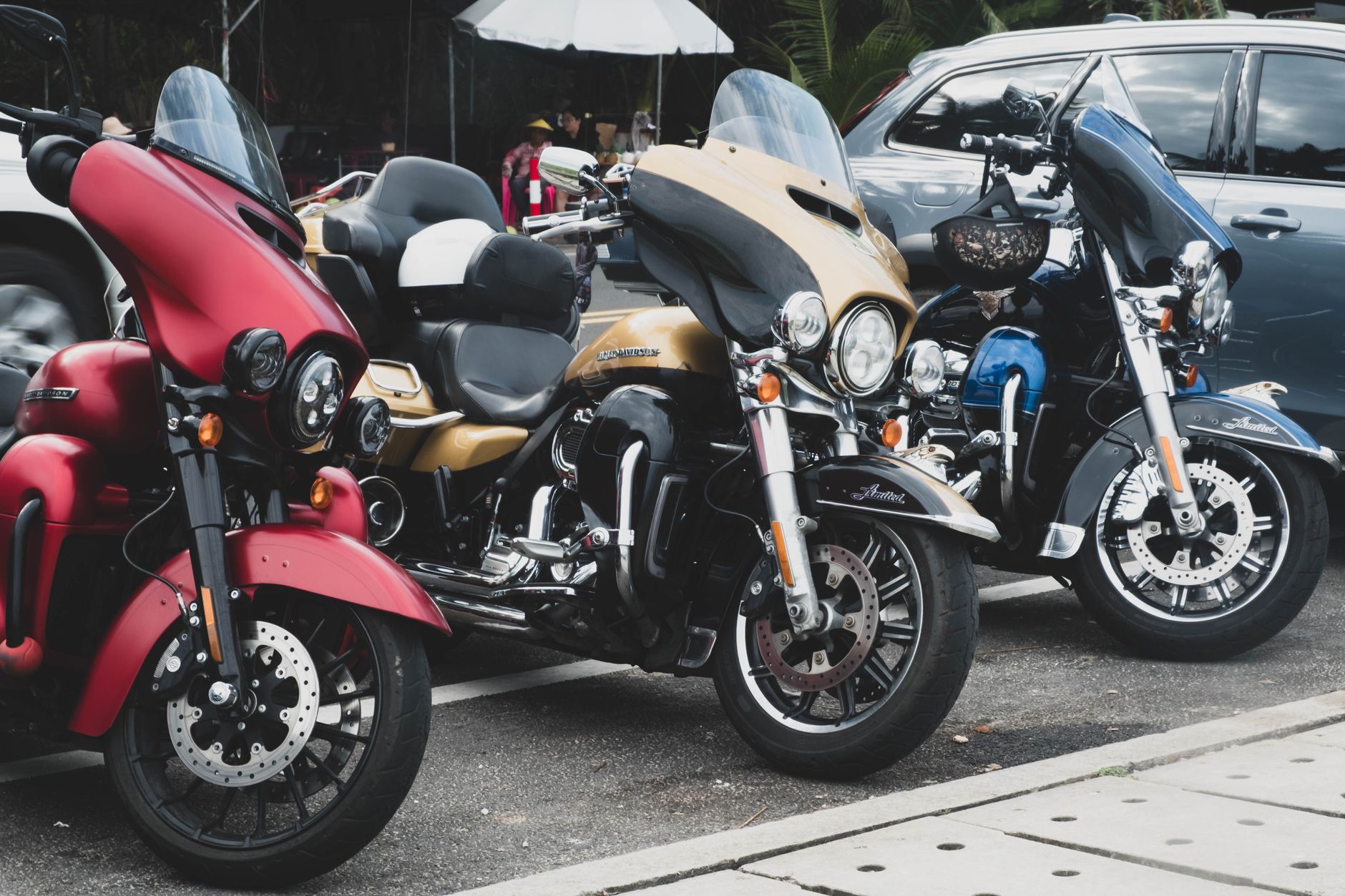
A street bike has roughly 45 square feet of painted surface. A cruiser or touring model can exceed 70 square feet. Adventure bikes, with all their luggage racks and body panels, add another 15–20 square feet. More surface means more clay-bar work, more compound passes, more coating to apply—and more time in the booth. A Scarborough customer brought a loaded Harley with cruiser styling; the full exterior detail alone ran 7 hours versus the 4 hours for his friend’s sport bike.
Dollar Impact: +$200–$400 for cruisers; +$300–$600 for adventure models compared to a sport bike baseline.
2. Paint Condition on Arrival
A showroom-condition Kawasaki with factory clear coat shows up clean. A three-year-old adventure bike that’s spent 180 days in sun and rain comes in with oxidation, UV damage, water spots etched into the clear, and swirl marks from careless hand washes. Honest bikes get a single-stage correction ($800–$1,200). Neglected ones need two-stage ($1,800–$2,800) or sit in a rotary buffer for 12 hours.
Dollar Impact: Paint correction adds $800–$2,800 on top of the detail. Skipping it forfeits 60–70% of the protection coating’s visual benefit.
3. Coating Choice: Ceramic vs. Graphene
Mid-tier ceramic (CarPro CQuartz, Chemical Guys Ceramic, Meguiar’s Hybrid Ceramic) runs $600–$950 applied. It delivers 9H hardness, decent hydrophobia, and lasts 12–18 months with reasonable care. Premium graphene coatings (Gtechniq Crystal Serum Ultra, IGL Coatings Kenzo, GYEON Balder) cost $1,200–$1,800 because they bond to the clear at a molecular level, offer 10H+ hardness, and hold water-beading for 24–36 months. The Mississauga Ferrari F8 Tributo we corrected in 2025—after someone else’s swirl-mark disaster—received Gtechniq Crystal Serum Ultra. That client reported the finish staying flawless for 18 months without a single decontamination wash.
Dollar Impact: Graphene costs $600–$850 more upfront but extends protection life by 12–18 months and reduces maintenance labor by 40–60%.
4. Interior Detailing & Protection
Leather seats, fabric tank covers, vinyl grips, gauge covers—they all absorb UV, dust, and road salt. Full interior detail including leather conditioning, fabric shampoo, and protective dressing runs $400–$650. Many customers skip this, assuming only exterior matters. That’s a mistake. A Brampton rider whose cruiser lived outdoors returned 11 months later asking why the seat cracked. Sun damage inside isn’t reversed by exterior coating.
Dollar Impact: Interior detail is optional but adds only $400–$650 and prevents $800–$1,200 in premature replacement costs.
5. Wheel & Brake Component Detailing
Chrome, aluminum, and matte-finish rims demand different cleaning protocols. Brake dust is abrasive ferrous oxide that etches bare metal and chrome finish fast. Ceramic-coated wheels require non-alkaline dressing—and here’s where we see the biggest DIY failure. Customers apply alkaline tire shine after a ceramic detail, the coating breaks down, and hydrophobia vanishes within two washes, leaving permanent streaks. The wheel correction (re-coating) runs another $200–$400 per bike.
Dollar Impact: Dedicated wheel prep adds $150–$250. Brake-dust removal and protection seal (using SiO2 or graphene) adds another $100–$200. Mistake correction (alkaline damage): $200–$400.
Real Examples — Full Motorbike Detailing Cost Breakdowns by Type
Example 1: Street/Sport Bike (Suzuki GSX-R750) — Toronto Client
Condition on arrival: One-year-old bike, garage-kept, light swirl marks from a single careless hand wash at a coin-op station in Downtown Toronto.
Service breakdown:
- Full exterior detail (wash, clay, compound) — $550
- Single-stage paint correction — $950
- CarPro CQuartz ceramic coating application — $750
- Wheel and brake component cleaning + SiO2 sealant — $200
- Interior detail (seats, tank interior, grips) — $500
- Subtotal: $2,950
- 13% HST — $383.50
- Total: $3,333.50
The client picked the bike up after 11 hours of work. The paint was flawless—9H hardness, water beading, full gloss restored. Six months in, the ceramic was still hydrophobic with zero maintenance washing required. Cost per month of guaranteed protection: $555.
Example 2: Cruiser (Harley-Davidson Street Glide 114) — Mississauga Client
Condition on arrival: Three-year-old bike with significant UV oxidation on fairing and tank. The owner had covered it with a tarp outdoors for two seasons. Clear coat was dull, water pooled instead of beading.
Service breakdown:
- Full exterior detail (70 sq ft surface area, extended clay work) — $700
- Two-stage paint correction (oxidation and minor scratches) — $2,300
- Premium graphene coating (Gtechniq Crystal Serum Ultra) — $1,600
- Wheel prep + ceramic wheel protection — $350
- Full interior detail (leather saddle, tank interior, chrome detail) — $600
- Subtotal: $5,550
- 13% HST — $721.50
- Total: $6,271.50
The Harley needed 18 hours across three days (paint correction was the bulk). The owner said it looked like a showroom build when it was done. 14 months later, it still hydrophobics and the leather hasn’t faded. That graphene premium paid for itself in avoided re-correction work.
Example 3: Adventure Bike (BMW R 1250 GS) — Richmond Hill Client
Condition on arrival: Active adventure rider, recently returned from 4,000 km trip across North America. Tank, fairings, and lower panels show trail dust, salt spray from US coastal roads, bug impact marks, and light scratches from brush contact.
Service breakdown:
- Full exterior detail including bug and tar removal — $750
- Single-stage paint correction (scratches and trail impact) — $1,100
- Graphene coating (IGL Coatings Kenzo) for long-term outdoor use — $1,400
- Protective film on leading edges of fairing (optional upsell, declined) — N/A
- Full interior detail — $550
- Wheel and undercarriage protection prep — $300
- Subtotal: $4,100
- 13% HST — $533
- Total: $4,633
12 hours of work. This rider plans to tour again this summer and said the graphene coating removes the anxiety of re-protecting before the next trip. No matter what road conditions happen, the finish is protected. One year in, zero degradation reported.
Hidden Costs to Watch — Traps That Inflate Your Motorbike Detailing Bill
- Pressure washer damage repair: Using 3,000+ PSI near trim seals, brake lines, or electrical connectors forces water into door panels and window channels. We’ve seen $400–$800 water-intrusion repairs that could have been avoided with low-pressure prep. Always ask your detailer: “What PSI are you using on my trim?”
- Coating prep failure surcharge: If a bike arrives with heavy dirt, algae, or previous wax buildup and isn’t properly stripped, contaminants get sealed under the ceramic. The coating looks fine for 2–3 weeks, then hazes or fails. Correction costs $400–$600. Professional detailers charge properly upfront for deep prep; discount shops skip it.
- Incompatible product stacking: Mixing SiO2 topcoats from different brands (e.g., Gtechniq on IGL base) causes chemical incompatibility. Within weeks, the finish hazes. We’ve had customers report this after applying a “protective topcoat” they bought themselves. Stick to one manufacturer’s ecosystem.
- Wheel damage from alkaline dressing: After a ceramic-coated bike, using alkaline tire shine (the cheap stuff from an auto-parts store) breaks down the hydrophobic layer on wheels. Streaking and loss of protection follow. Correction costs $200–$400. We use only pH-neutral dressing compatible with coatings.
- Rush or weekend surcharges: Need the bike detailed by Friday for Saturday ride? Many shops charge +15–25% for expedited scheduling. Book with 1–2 weeks’ lead time to avoid this.
- Multiple paint correction rounds: If a correction is done poorly (insufficient grit progression or wrong compound for the clear type), paint depth decreases without result. A second correction costs full price again. Choose a shop with a guaranty—we stand behind every correction.
How to Save Without Cutting Quality — Three Strategies That Work
1. Bundle Exterior + Interior + Coating in One Visit
Booking a full-service package (detail, interior, coating) in one 12–14-hour day or a split 2-day turnaround saves 15–20% compared to spacing services weeks apart. Setup and breakdown happen once. The technician stays in rhythm. A Richmond Hill customer saved $380 by bundling versus paying for exterior detail ($650), then interior ($500), then coating ($950) as separate bookings. The all-in package came to $2,200.
2. Choose Mid-Tier Ceramic Over Premium Graphene (Unless Touring or Outdoors)
If your bike spends 70% of the year in a garage and you ride weekends in the GTA, CarPro CQuartz or Meguiar’s Hybrid Ceramic ($600–$950) delivers 12–18 months of flawless protection. Graphene ($1,200–$1,800) is worth the premium only if the bike is parked outdoors year-round or you tour 6,000+ km annually. A North York rider with a garage storage situation chose ceramic, recoated annually for $700, and paid $2,100 total over 3 years. A graphene customer with seasonal outdoor parking paid $1,800 upfront and skipped recoating for 28 months—also cost-effective, but only because of sun and weather exposure.
3. Do Single-Stage Correction Instead of Two-Stage (If Paint Is Honest)
Two-stage correction ($1,800–$2,800) removes oxidation and deep scratches by stepping down through multiple polishing compounds. Single-stage ($800–$1,200) handles light swirl marks and minor UV dullness in one pass. If your bike shows surface swirls but the clear coat is thick and glossy, single-stage is honest work. If it’s lived outdoors for 3+ years with visible oxidation, you need two-stage. Don’t skip paint correction entirely hoping ceramic will hide flaws—it won’t. Coating amplifies whatever surface condition exists underneath. An Etobicoke customer skipped correction entirely, ceramic still looked flat, and asked for a re-do. The correction + recoating cost $2,400 total instead of $1,100 if done right the first time.
Frequently Asked Questions About Motorbike Detailing Cost in the GTA
Q1: How long does ceramic or graphene coating actually last on a motorcycle?
Ceramic coatings typically last 12–18 months with normal care (monthly washings, no alkaline products). Graphene coatings extend to 24–36 months because the bond is molecular rather than surface-level. The Mississauga Ferrari owner who received Gtechniq Crystal Serum Ultra reported the finish staying flawless for 18 months without a single decontamination wash—that’s the upper range for a coating that sees regular use. Shelf life depends on storage (garage vs. outdoors) and maintenance discipline (alkaline wheel dressing will kill any coating in weeks).
Q2: Can I wash my motorcycle myself after ceramic coating, or does it void the warranty?
Yes, you can wash it yourself—in fact, regular washing extends coating life. Use only pH-neutral motorcycle shampoo (avoid car wash soaps, which are often alkaline), a microfiber wash mitt, and low-pressure water. Never use a pressure washer above 1,500 PSI. The biggest mistake is applying alkaline wheel dressing or tire shine after coating; that breaks down hydrophobia instantly. Stick to non-alkaline, coating-safe products (we recommend Optimum Polymer Technologies or IGL Coatings branded accessories). No warranty is voided by proper DIY washing—only by using incompatible products or pressure washers.
Q3: Is paint correction really necessary before ceramic coating, or can I coat over existing swirl marks?
Paint correction is not optional if you want a flawless finish. Ceramic coating is optically clear and amplifies whatever surface condition exists underneath—swirl marks, water spots, oxidation, and scratches all show through and are now permanently sealed under 9H hardness. You cannot buff them out once coating is applied. The cost of correction ($800–$2,800) is an investment in the visual result, not an add-on. An Etobicoke customer skipped it, regretted it, and paid for single-stage correction plus recoating ($2,400) instead of correcting upfront ($1,100). Always ask your detailer: “Do you recommend paint correction for my bike’s condition?”
Q4: What’s the difference in price between ceramic and graphene, and is graphene worth the premium?
Ceramic costs $600–$950 applied; graphene costs $1,200–$1,800—a premium of $600–$850. Graphene lasts 12–18 months longer, resists environmental contaminants better, and reduces maintenance labor by 40%. If your bike is garage-kept and ridden seasonally, ceramic is sufficient. If it’s parked outdoors year-round or you tour frequently, graphene’s longer lifespan and durability justify the upfront cost. A Brampton customer with an adventure bike touring 8,000 km per year chose graphene; it stayed protected for 28 months without recoating. A Toronto garage-keeper with a sport bike chose ceramic, recoated annually, and spent the same total over 3 years but with more frequent visits. Both are financially sound—it depends on your riding style and storage conditions.
The Bottom Line: Motorbike Detailing Cost in the GTA
Expect to pay $1,200–$3,200 for a full exterior detail with ceramic coating on a street bike, or $1,600–$2,400 for a cruiser or adventure model. That price reflects proper surface prep, professional paint correction (if needed), and application of a legitimate coating—not a discount wash-and-wax. The real cost isn’t the service itself; it’s the avoidance of later damage. A $1,100 detail with single-stage correction and ceramic today prevents a $2,400 re-correction job next year. A $1,600 graphene detail on an outdoor-parked bike extends the protection window by 12 months compared to ceramic, saving the hassle of recoating annually.
The mistake most riders make is thinking ceramic coating alone restores a neglected finish. It doesn’t. Paint correction must come first. And once coating is applied, one incompatible product—one alkaline wheel dressing, one pressure wash at high PSI, one mixed-brand topcoat—can undo months of protection. A Vaughan rider learned this the hard way: $1,800 graphene detail, then a $400 mistake with alkaline wheel shine, then a $400 re-coating correction. Book with a detailer who educates, uses only compatible products (Gtechniq, IGL, GYEON, CarPro, Chemical Guys), and stands behind the work with a written guaranty.
Your bike is a significant investment. The protection detail isn’t a luxury—it’s preventive maintenance. Done right, it costs less than a set of new tires and delivers years of flawless finish.
Nascar Auto Care
Premium motorbike detailing, ceramic & graphene coatings. Serving North York, Mississauga, Oakville, Richmond Hill, and all of the Greater Toronto Area.
🎧 Listen to article
- RV Detailing Cost in the GTA — What Full Interior and Exterior Protection Actually Costs by RV Length
- Full Auto Detailing Cost in Mississauga — What You Actually Pay for Interior, Exterior, and Both Combined
- Gyeon Quartz vs CarPro CQuartz vs Gtechniq C1: Which Ceramic Coating Performs Best on Dark-Coloured GTA Vehicl
- Paint Protection Film Cost in Toronto — Full Breakdown by Coverage Zone: Partial Hood vs Full Front vs Full Ve
- Ceramic Coating vs Graphene Coating vs Paint Protection Film: Which One Survives Toronto Road Salt Seasons
This article was drafted with AI assistance to ensure factual accuracy.