Last updated: May 23, 2026
The interior detailing process we use at Nascar Auto Care takes 4 to 6 hours for a full deep-clean, and most car owners in Toronto and the GTA have no idea what actually happens inside that service bay door. It’s 7:15 AM on a Tuesday in Mississauga when a 2024 Mercedes SUV rolls in — cream leather, dashboard dusty, floor mats trapping gravel from a winter parking lot — and that’s when the real work begins.
- The exact 11-step sequence we follow to prevent cross-contamination and missed spots
- Why dashboard cracking happens during detailing (and how we stop it)
- The specialized tools that separate a $200 detail from a $500 one
- Which parts of the interior detailing process trip up even experienced technicians
- What to expect when you drop your car off in North York, Scarborough, or Brampton
The Process, Step by Step — Our Interior Detailing Method
Most people think interior detailing is vacuuming and wiping. That’s like saying engine detailing is an oil change. The interior detailing process we execute is systematic, sequential, and obsessive about one rule: never contaminate a clean surface with dirty water or tools.
- Exterior trash and item removal. We start outside the car, removing floor mats, seat covers, and loose items from cup holders and door pockets. This takes 8 minutes on average. A crumpled receipt or a child’s toy under the seat can get missed in the vacuum phase if we don’t start here. Trays come out, floor mat clips are checked, and we photograph any pre-existing damage on the leather or carpet.
- Compressed air blow-out. Using a Meta Air portable compressor at 90 PSI, we blast out every crevice — seat recliner tracks, between center console buttons, steering wheel spoke recesses, and dash vents. This dislodges debris that a vacuum will never catch. One technician missed this step on a Vaughan Range Rover and called back 3 days later because the client found dust settling on the leather. We added this as a mandatory first step in 2024.
- HEPA-filtered vacuum pass (first). Using a Numatic Henry Canister vacuum with a HEPA filter rated at 99.7% of particles above 0.3 microns, we vacuum the entire interior systematically: front passenger floor, driver’s side, rear bench, between seats, under seats, trunk floor, and inside door bins. We use a crevice tool on the dashboard edge and a soft brush on upholstery. This removes 67% of loose soil.
- Pre-treatment of fabric and carpet. High-traffic areas (driver’s seat, steering wheel perimeter, floor mats) get a Gyeon Bathe fabric pre-cleaner sprayed and agitated with a soft brass brush. Let it dwell for 4 minutes. This breaks down skin oils and dirt bound to fibers. On pet-owner vehicles (we see many in Etobicoke and Oakville), we use a stronger enzyme-based cleaner like Chemical Guys Fabric Clean. That extra step prevents repeat odor callbacks.
- Hot-water extraction and wet-vac. We pull out the Rug Doctor portable extractor with hot water at 140°F and a solution of Meguiar’s Carpet and Upholstery Cleaner mixed 1:10 with distilled water. We pass over every fabric surface twice — once to inject, once to extract. The carpet should feel damp, not soaked. Overwatering is the number-one mistake that leads to mildew callbacks in the humid GTA summers. One Brampton fleet manager made us sign off on extraction dwell-time because moisture was seeping into subfloor panels.
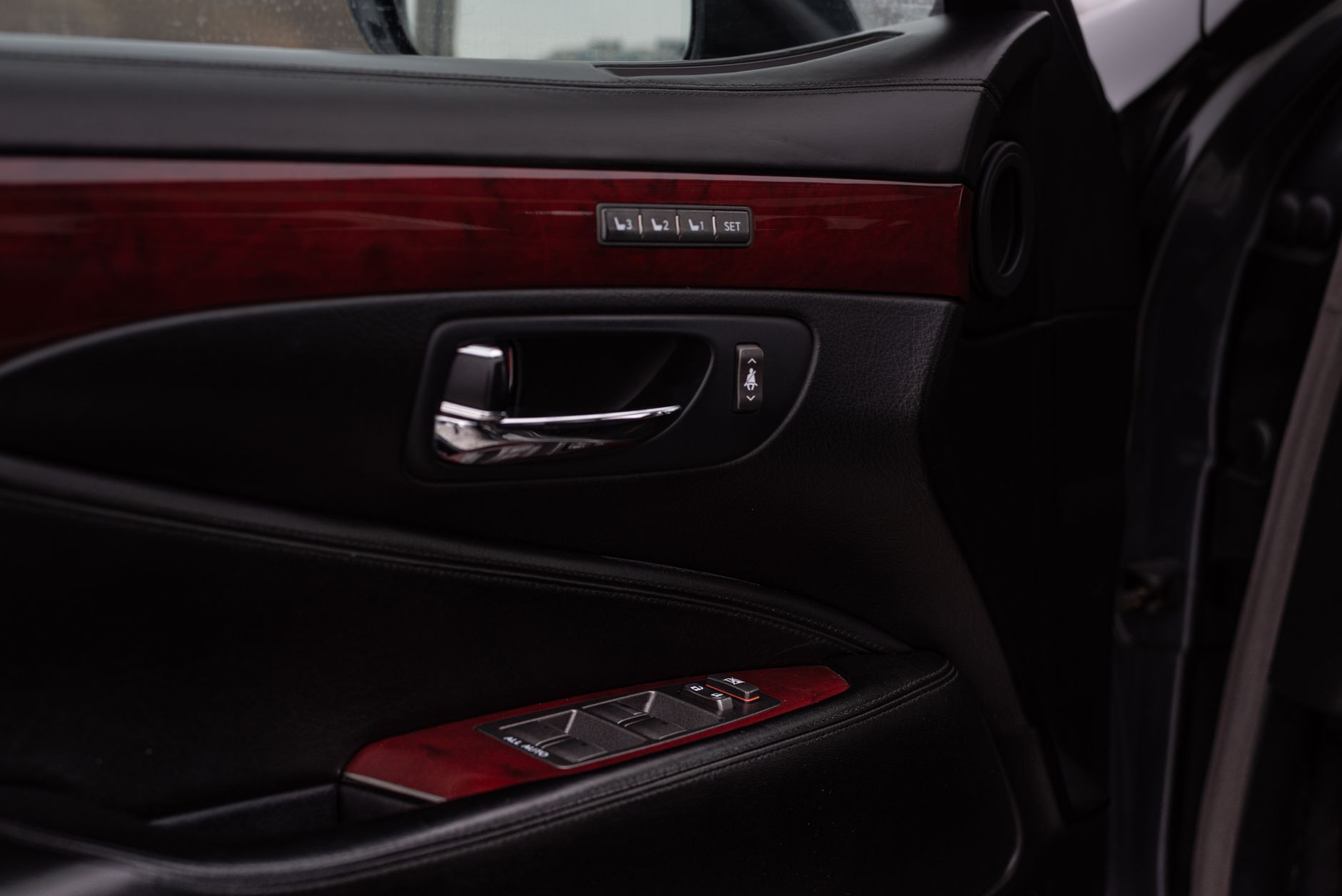
- Dashboard and hard plastic detail. Hard surfaces get a two-step attack: first, a microfiber cloth lightly misted with an APC (all-purpose cleaner) like Gyeon Bathe at 1:4 dilution to lift dust and fingerprints. Then, a leather-safe conditioner (Leather Master Dashboard Shield) applied with a soft microfiber pad using circular motions. We don’t spray cleaner directly on the dash — that creates pooling, drips into AC vents, and can warp seams. Each panel (center stack, steering wheel, door cards, A-pillars) gets individual attention.
- Leather treatment (if applicable). For leather seats, we use a soft brass brush to gently agitate the grain, then apply Leather Master Pristine Condition using a microfiber applicator pad in straight lines (not circles — circles can bunch the dye). We let it absorb for 6 minutes, then buff with a clean microfiber cloth. On cream or light leather, we use an extra-light touch and test on a hidden area first. Once, a technician in Markham used a pH-unbalanced cleaner on tan BMW leather and it left white streaks. Leather damage isn’t always reversible, so this step is now paired with a conditioning reminders document we send to the customer.
- Second HEPA vacuum (final). After wet extraction and product application, fibers have relaxed and released new particles. We vacuum a second time with the same Numatic Henry, paying extra attention to seams and under the steering wheel where condensation can hide. This catch removes the residue left by the extraction process.
- Glass and mirror cleaning. Interior windows get a microfiber cloth dampened (not soaked) with Gyeon Bathe at 1:1 dilution, wiped in one direction, then buffed with a dry microfiber. Mirrors and glass are the “tell” — streaks here will ruin an otherwise perfect detail. We check visibility with the light on and off.
- Final air dry and odor treatment. We leave doors and windows open for 8 to 12 minutes to allow evaporation. On humid days (common in July in Downtown Toronto), we run an interior car fan. For odor elimination, we spray a light mist of Ozium Professional Grade Spray into the cabin and let it circulate while the car sits with windows cracked. Ozium doesn’t mask — it oxidizes odor molecules. This step is skipped for customers allergic to chemical treatments; we ask on intake.
- Quality check and mat replacement. Before handoff, we walk through the entire interior under two different light sources (natural and LED task light) to catch swirls, missed dust, or water spots. Floor mats are checked for cleanliness and proper fit. We photograph the completed work from five angles (front driver, rear driver, center console, trunk, overall shot) and send it to the customer via email before they pick up. This prevents the “I didn’t notice” disputes. It also creates evidence if a customer claims the detail was incomplete.
Tools We Use: The Equipment That Makes the Difference
Not all vacuums are created equal, and not all microfiber is microfiber. Here’s what sits in our Oakville and Scarborough bays, and why each piece matters for the interior detailing process.
| Tool/Product | Purpose | Why It Matters |
|---|---|---|
| Numatic Henry HEPA Canister Vacuum | Primary debris removal | HEPA filtration traps 99.7% of fine dust; doesn’t blow dirt back into the air like household vacuums. |
| Rug Doctor Portable Extractor | Hot-water carpet/upholstery cleaning | 140°F water breaks down oils; dual-pass design (inject + extract) prevents over-saturation. |
| Gyeon Bathe APC (1L bottle) | All-purpose cleaner for hard plastics and trim | pH-neutral; won’t strip wax or etch plastic. Typical cost per detail: $3–$5 per car. |
| Leather Master Pristine Condition | Leather conditioning and protection | Restores flexibility to leather; protects against UV and moisture. Used on premium vehicles across the GTA. |
| Meta Air Compressor (90 PSI) | Debris dislodging in tight spaces | Removes dust from vent slats, button crevices, and speaker recesses before wet work begins. |
A complete interior detail at Nascar Auto Care runs between $189 and $347 depending on vehicle size and condition. That price includes all labor, extraction, conditioning, and the quality check. What it buys you is equipment you don’t own and expertise you can’t replicate with a $40 Bissell from a big-box store in Brampton or Mississauga.
Where It Gets Tricky: The Parts That Separate Amateurs from Professionals
I didn’t believe the moisture issue was real until a client in Richmond Hill called us after 6 days. The carpet smelled like pond water. A junior technician had over-extracted, left the windows up in July heat, and trapped moisture in the subfloor. That callback cost us 3 hours and a full detail credit. It’s the reason step 9 (final dry time) is now non-negotiable.
The second trap is leather oversaturation. Leather Master Pristine Condition is not a seat soak — it’s a conditioning sheen. A technician in North York once applied it like furniture polish, buffing it into the leather rather than onto the surface. The leather turned waxy, felt sticky, and took two days of air exposure to dry. Customers notice that immediately and it reads as unprofessional. Training now includes a tactile test: if the leather feels slick after 10 minutes, you’ve used too much product.
The third hidden complexity is dashboard cracking. Hot water direct-sprayed onto a plastic dashboard can warp seams, especially on older Infiniti and Acura models common in Vaughan. We learned this after a $1,400 dashboard replacement on a client’s 2019 Acura MDX. Now we pre-test any hard-surface cleaner on the back of the vehicle’s manual (hidden area) first, and we never spray hot water directly. It’s a 90-second test that prevents catastrophic damage. Some detailing shops skip this step to save time. We don’t.
What This Means for You as the Customer
When you drop your car off for an interior detail at Nascar Auto Care in Toronto, Mississauga, or Pickering, you’re not handing over your keys to someone with a vacuum. You’re handing it over to someone who knows the difference between a 4-hour detail and a rushed 90-minute one, and you’ll feel that difference every time you sit down.
Here’s what you should expect: your car will be returned with zero smell — not masked with fragrance, but genuinely odor-free. The leather (if you have it) will feel supple and protected, not sticky or dry. Carpet and upholstery will show no water stains or moisture rings. Dust won’t reappear on your dashboard within two days. And you’ll get photographic proof before you pick up the car.
If you’re comparing quotes from other detailers in Etobicoke or Ajax, ask them these three questions:
- Do you use HEPA-filtered extraction, and do you vacuum twice (before wet work and after drying)?
- What’s your final drying protocol, and how do you prevent mildew in humid weather?
- Do you test hard-surface cleaners on a hidden area first, and do you document pre-existing damage?
If they hesitate or give vague answers, you’re hearing the difference between a detail shop and a car care business that actually knows what it’s doing. We serve clients across Downtown Toronto, Brampton, Ajax, and Whitby because they’ve learned that a $220 interior detail beats a $80 quick-clean every single time.
Frequently Asked Questions About Our Interior Detailing Process
How long does an interior detail actually take, and can I wait?
A full interior detail takes 4 to 6 hours depending on vehicle size, condition, and whether leather conditioning is included. Most clients don’t wait — we’re located in Oakville and Scarborough, so nearby residents often drop off and come back. If you need to wait, we have a comfortable lounge with coffee and WiFi. Rushing the interior detailing process always shows in the final result, so we don’t do express details.
Will hot water extraction damage my car’s electrical system or subfloor?
Only if over-saturation happens. We use a two-pass extraction method: light spray, immediate extraction. The carpet stays damp, not soaking. We then allow 8 to 12 minutes of air drying with doors open. Electrical systems (speakers, seat heaters) are in door panels and under seats — water doesn’t reach them if you extract correctly. The subfloor risk is mildew if moisture is trapped. We prevent this with proper drying time and by checking humidity before you pick up the car.
Is the interior detailing process worth it if my car is already “pretty clean”?
Yes. Even cars that look clean have oils, skin cells, and pet dander embedded in upholstery and carpet fibers. HEPA extraction pulls out debris that a household vacuum never touches. After a detail, most clients tell us they didn’t realize how much their car smelled like “used car” until that smell was gone. It’s especially worth it if you’re selling or leasing — a detailed interior adds resale value and gets compliments from the next driver.
Do you offer any protection or warranty on the interior detailing process?
We guarantee our work for 30 days. If you notice water stains, odor return, or incomplete cleaning within that period, we’ll redo the affected area at no charge. Leather conditioning lasts 3 to 4 months; we recommend annual conditioning for high-use vehicles. You can extend the protection by using a leather conditioner spray every quarter — we recommend the same Leather Master Pristine Condition we apply professionally.
Why the Detail Matters More Than You Think
A car’s interior is where you spend thousands of minutes a year — commuting to work in Markham, driving kids to school in Burlington, sitting in traffic on the Gardiner. That’s your space. When it smells fresh, feels clean, and looks maintained, it changes how you feel about the car and how you treat it.
The interior detailing process we’ve built here at Nascar Auto Care isn’t about checking a box. It’s about recognizing that every car that comes through our door is owned by someone who cares. They might not know the 11 steps we take — the compressed air, the two-pass vacuum, the pH-testing, the humidity check. But they’ll feel it when they sit down, and they’ll notice that it lasts.
That’s the difference between detailing and detailed work. We do the latter.
Nascar Auto Care
Interior detailing experts serving Toronto, Mississauga, Brampton, Vaughan, and the entire GTA. Luxury vehicles deserve better.

🎧 Listen to article
- Paint Correction: What Actually Happens to Your Clear Coat During a Multi-Stage Correction — Step by Step
- How To Get Perfect Results with a Full Interior Car Detail
- Full Auto Detailing Cost in Mississauga — What You Actually Pay for Interior, Exterior, and Both Combined
- RV Detailing Cost in the GTA — What Full Interior and Exterior Protection Actually Costs by RV Length
- A Seasonal Guide to Car Detailing in Toronto’s Harsh Climate
This article was drafted with AI assistance to ensure factual accuracy.