Quick Summary
A ceramic coating is one of the best investments you can make for your vehicle — but it only delivers long-term results if you maintain it correctly between professional detailing sessions. In this guide, you will learn how to wash, dry, and protect a ceramic coated car at home using the right tools and techniques. From choosing a pH-neutral shampoo to applying a ceramic boost spray, every step here is designed to preserve your coating’s hydrophobic properties, gloss, and scratch resistance for years to come.
Why Maintenance Matters for Ceramic Coated Cars
Getting a professional ceramic coating applied to your vehicle is a significant investment — and for good reason. Ceramic coatings bond chemically to your paint surface, creating a hard, hydrophobic shell that repels water, resists UV damage, and makes dirt far easier to remove. However, a common misconception is that ceramic coatings are completely “set it and forget it.” The truth is that how you maintain a ceramic coated car between detailing sessions directly determines how long the coating performs at its peak.
Without proper care, contaminants like iron particles, road tar, bird droppings, and tree sap can degrade the coating over time, dulling its gloss and weakening its protective properties. Using the wrong cleaning products — even once — can strip the hydrophobic layer or introduce micro-scratches that diminish the finish. The good news is that maintaining a ceramic coated car is not complicated. It simply requires consistent habits and the right products.
At Nascar Auto Care’s ceramic coating services, every vehicle is treated with professional-grade ceramic or graphene coatings, and our team walks every client through the aftercare process. This article expands on that guidance so you can protect your investment long after you drive off our lot.
What to Avoid After a Ceramic Coating
Before diving into what you should do, it is critical to understand what can damage or prematurely degrade a ceramic coating.
Avoid Automatic Car Washes
Tunnel car washes and automatic brush washes are one of the fastest ways to ruin a ceramic coating. The stiff rotating brushes carry embedded grit from previous vehicles and create swirl marks across your paint. Touchless washes are slightly better but rely on harsh alkaline or acidic chemicals to compensate for the lack of agitation — and those chemicals can degrade the coating’s surface over time.
Avoid pH-Aggressive Cleaning Products
Never use dish soap, all-purpose cleaners, or any product with a high pH or low pH on a ceramic coated surface. These formulas strip the coating’s hydrophobic properties quickly. Always use a pH-neutral automotive shampoo specifically formulated for coated vehicles.
Avoid Letting Contaminants Sit
Bird droppings, bug splatter, and tree sap are acidic. Even though a ceramic coating provides a sacrificial barrier, these substances can etch through if left to bake in the sun. Remove them as soon as possible using a quick detailer or dedicated spot-cleaning spray.
Avoid Waxing Over a Ceramic Coating
Traditional carnauba wax sits on top of your coating but does not bond to it the way a ceramic topper does. Wax can actually create a hazy appearance and fill in the coating’s hydrophobic pores, reducing water beading. Stick to ceramic-compatible boost sprays instead.
How to Wash a Ceramic Coated Car Correctly
The wash process is where most DIY damage occurs. Here is a step-by-step approach to safely wash a ceramic coated vehicle at home.
Step 1: Rinse the Vehicle Thoroughly First
Before touching the paint, always pre-rinse the entire vehicle with a strong stream of clean water. This removes loose dirt, dust, and debris that would otherwise be dragged across the surface during washing, causing micro-scratches.
Step 2: Use the Two-Bucket Method
Fill one bucket with your pH-neutral ceramic shampoo solution and a second bucket with clean rinse water. After washing each panel, rinse your wash mitt in the clean-water bucket before reloading it with soapy water. This prevents contaminated water from being spread back onto the paint. Place a grit guard at the bottom of each bucket to trap dirt particles.
Step 3: Use a Microfiber Wash Mitt — Not a Sponge
Microfiber wash mitts are far safer for coated surfaces than traditional sponges, which trap grit against the paint. Use straight, overlapping strokes — never circular motions — to wash each panel. Start at the roof and work your way down to the lower panels, which carry the most contamination.
Step 4: Rinse Off Suds Completely
Rinse each panel before the shampoo has a chance to dry on the surface. On warm, sunny days, work in the shade or during cooler parts of the day to prevent premature drying.
Step 5: Avoid Washing in Direct Sunlight
Washing a ceramic coated car in direct sunlight causes water and soap to evaporate too quickly, leaving behind water spots and soap residue that can be difficult to remove without professional intervention.
Proper Drying Techniques to Prevent Water Spots
Even if your wash technique is perfect, poor drying habits can still leave water spots that etch into your coating over time.
Use a High-Quality Waffle-Weave Microfiber Drying Towel
Waffle-weave microfiber towels are thick, highly absorbent, and extremely gentle on coated surfaces. Avoid terrycloth towels or chamois, which can trap grit and scratch the surface. Pat dry or gently drag the towel across panels in one direction — do not rub.
Blow-Dry with Compressed Air or a Dedicated Car Dryer
One of the most effective ways to eliminate water from crevices, door jambs, mirrors, and trim pieces is using compressed air or a dedicated automotive blow dryer. This prevents hidden water from dripping out after you have dried the main panels, which is a common cause of water spotting.
Apply a Ceramic Quick Detailer as a Drying Aid
Spritz a ceramic-compatible quick detailer directly onto wet paint panels and use a drying towel to spread it while drying. This adds a layer of lubrication that minimizes marring and leaves behind a refreshed hydrophobic layer — a great habit after every wash.
Periodic Decontamination: Why It Still Matters
Even with regular washing, certain contaminants bond to the coating at a microscopic level and resist normal shampoos. Iron particles from brake dust, for example, embed themselves into the surface and cause oxidation if left untreated. Every three to six months, perform a full decontamination step:
- Iron Fallout Remover: Spray an iron-specific fallout remover on your coated surface and watch it react with iron particles (turning purple or red). Rinse thoroughly. This is safe for ceramic coatings.
- Clay Bar or Clay Mitt: After iron decontamination, use a clay bar or a fine clay mitt with a clay lubricant to lift any remaining bonded surface contaminants. Use a gentle formulation specifically designed for ceramic coated surfaces.
- Follow with a Ceramic Boost Spray: After decontamination, always follow up with a ceramic topper or boost spray to refresh the hydrophobic layer before it is exposed to the elements again.
If you are unsure about performing decontamination yourself, our team at Nascar Auto Care’s paint correction and detailing services can handle this as part of a maintenance detail session.
Using Ceramic Boost Sprays Between Details
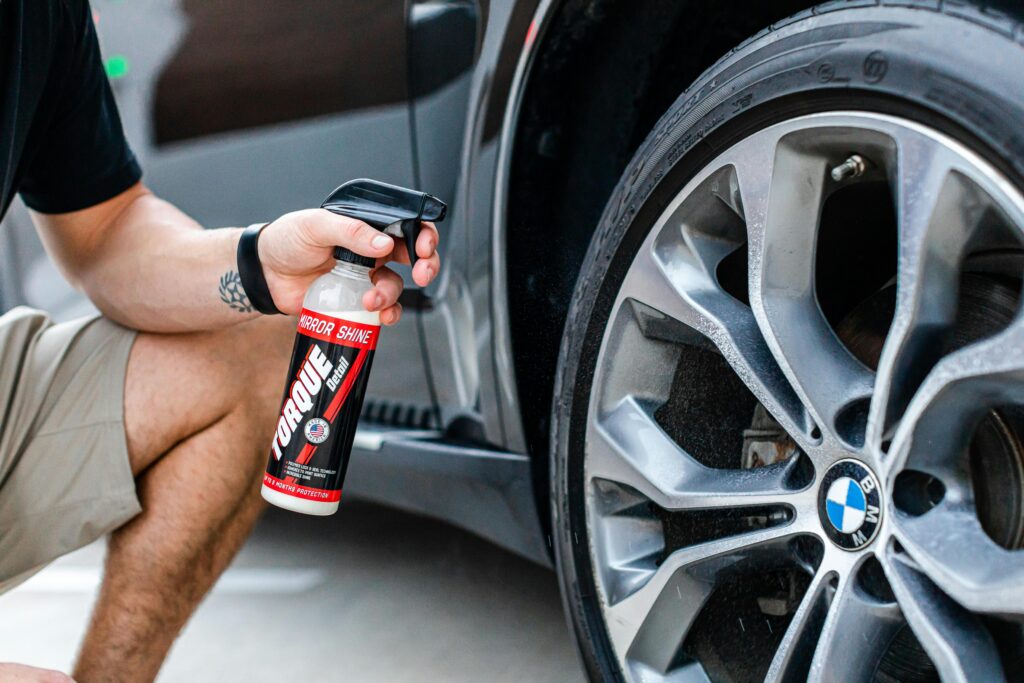
One of the most effective tools for maintaining a ceramic coated car between professional sessions is a ceramic SiO2 boost spray. These sprays contain silicon dioxide — the same base compound in your coating — and when applied to a clean, dry surface, they temporarily reinforce the hydrophobic layer.
When to Apply a Ceramic Boost Spray
- After every wash, as a final step
- After a heavy rainfall that leaves water spots
- After decontamination
- Every four to six weeks as a standalone treatment on a clean vehicle
How to Apply a Ceramic Boost Spray
Work on one panel at a time. Spray two to three sprays onto the panel or directly onto a clean microfiber applicator pad. Spread evenly across the surface in straight overlapping strokes. Buff to a clear, streak-free finish with a separate clean microfiber towel before moving to the next panel. Do not apply in direct sunlight or when the panel is hot to the touch.
Smart Parking and Storage Habits
Where and how you store your vehicle plays a significant role in how long your ceramic coating lasts.
- Park in a garage whenever possible. UV exposure is one of the top causes of coating degradation over time. Indoor storage shields the coating from constant solar bombardment.
- Use a car cover for outdoor storage. If you must park outdoors for extended periods, a soft, breathable car cover will protect the coating from UV rays, tree sap, bird droppings, and airborne industrial fallout.
- Avoid parking under trees. Trees drip sap, attract birds, and drop pollen — all of which are harmful to a coated surface. Even with a ceramic coating, repeated exposure to these contaminants without timely cleaning shortens the life of the product.
- Be mindful of road salt in winter. In the GTA, road salt is a constant winter reality. Rinse your vehicle more frequently during winter months, as salt brine is corrosive and can gradually degrade even a professionally applied coating if left to accumulate.
How Often Should You Schedule Professional Detailing?
Even with diligent at-home maintenance, professional detailing sessions are a necessary part of truly preserving a ceramic coating over its full lifespan.
As a general guideline:
- Every 6 months: A professional maintenance detail that includes decontamination, paint inspection, and a full ceramic boost application.
- Every 12 months: A full interior and exterior detail combined with a thorough coating inspection to assess whether any areas need spot treatment or a full layer refresh.
- Every 2 to 3 years: Depending on the coating product and environmental conditions, a full professional reapplication or refresh may be warranted to restore peak performance.
Our luxury auto detailing packages at Nascar Auto Care are designed with coated vehicles in mind, ensuring that every maintenance visit protects and extends your original coating investment.
Warning Signs Your Ceramic Coating Needs Attention
Knowing how to read the signs of a degrading ceramic coating allows you to act before permanent damage occurs. Watch for these indicators:
- Water no longer beads prominently: A fully functioning ceramic coating causes water to sheet and bead dramatically. If you notice water spreading out flat rather than forming tight beads, the hydrophobic layer has been compromised and needs a boost treatment or professional assessment.
- Paint feels rough after washing: A smooth, slick feeling after washing is a hallmark of a healthy ceramic coating. A rough or gritty feel suggests bonded contamination that requires decontamination.
- Visible swirl marks or light scratches: If swirl marks or surface scratches appear, the coating has absorbed damage. Depending on severity, a professional polish and recoat may be necessary.
- Dull or hazy finish: Loss of depth and gloss indicates the coating surface is degraded or contaminated. This is best addressed with a professional machine polish and fresh coating application.
- Staining that will not wash off: Permanent-looking stains from bird droppings, water spots, or industrial fallout that resist normal washing require professional intervention to correct without damaging the underlying paint.
If you notice any of these signs, do not wait. Early intervention is far less costly and less involved than correcting damage that has been allowed to progress. Our specialists at Nascar Auto Care can assess your coating’s condition and recommend the right solution.
Keep Your Ceramic Coating Performing Like New
Your ceramic coating is only as good as the care it receives. Whether you need a maintenance detail, a full decontamination and boost service, or a professional assessment of your coating’s condition, the team at Nascar Auto Care is ready to help. We serve vehicle owners across the Greater Toronto Area with premium detailing services built around ceramic and graphene coated vehicles.
Do not wait until your coating starts to fail. Schedule your next professional detailing session today and give your vehicle the expert care it deserves.
- How To Choose Between Ceramic Coating and Graphene Coating for Your Car
- A Seasonal Guide to Car Detailing in Toronto’s Harsh Climate
- How To Maintain Your Ceramic Coating After Professional Application in Toronto
- Interior Detailing: What Happens Inside Your Car During a Full Deep-Clean — The 11-Step Process We Use
- How To Detail Your Motorbike Like a Professional
This article was drafted with AI assistance to ensure factual accuracy.