
Your vehicle’s paint tells a story. Every drive exposes your car to environmental contaminants, UV rays, water spots, and minor scratches that gradually diminish its appearance. Whether you’re driving a luxury sedan through downtown Toronto or a sports car through the GTA, paint correction services can restore your vehicle to showroom condition. In this comprehensive guide, we’ll explore everything you need to know about professional paint correction, why it matters, and how to find the best paint correction services in the GTA.
Table of Contents
- Paint correction removes swirl marks, scratches, water spots, and oxidation using specialized abrasive compounds
- Professional service can restore 80-95% of paint clarity depending on damage severity
- Typical GTA paint correction service ranges from $800-$3,500+ depending on vehicle size and damage extent
- Multi-stage correction is more effective than single-stage for luxury vehicles and severe defects
- Ceramic or graphene coating after correction locks in results for 2-10 years
What is Paint Correction?
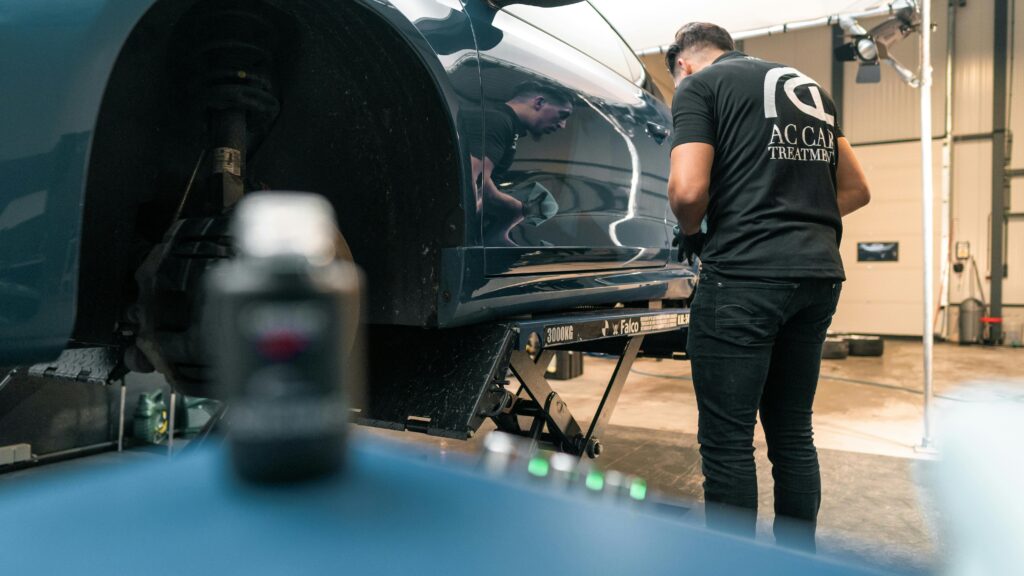
Paint correction is a multi-stage detailing process that removes surface imperfections from your vehicle’s clear coat and paint layers. Unlike simple polishing, professional paint correction services use specialized compounds, pads, and machines to level the paint surface, effectively “sanding away” defects rather than filling or hiding them.
The clear coat on your vehicle is typically 25-50 microns thick. Paint correction carefully removes microscopic layers of this clear coat to eliminate imperfections while preserving structural integrity. When done correctly, the result is a perfectly smooth, reflective surface that enhances color depth and gloss.
Types of Paint Damage & Defects
Understanding the types of damage your vehicle’s paint faces is essential to knowing whether paint correction in the GTA is the right solution for your specific situation.
Swirl Marks & Micro-Scratches
The most common paint defect, swirl marks appear as fine, circular scratches in the clear coat. These result from improper washing techniques, automated car washes, or abrasive drying methods. They’re visible primarily under direct sunlight and significantly diminish a vehicle’s appearance without affecting protection.
Water Spots & Mineral Deposits
Hard water minerals leave etched patterns on clear coat when water dries in the sun. In the GTA, mineral-heavy water and seasonal weather create persistent water spotting. While surface deposits can be removed by polishing, etched water spots require paint correction for complete removal.
Paint Oxidation & UV Damage
Exposure to sun, salt, and environmental contaminants causes the clear coat to oxidize, creating a dull, hazy appearance. Oxidation is particularly common on older vehicles and those not protected by ceramic coatings. Paint correction removes the oxidized layer to reveal vibrant color beneath.
Light Scratches & Paint Overspray
Minor contact damage, door dings, and paint overspray from nearby work create visible imperfections. Paint correction can remove light scratches (less than 50 microns deep) and overspray, but deeper damage may require repainting.
Hologram & Buffer Trails
Improper polishing technique creates visible lines and holograms under certain lighting. These defects indicate poor prior detailing work and can be corrected through proper multi-stage paint correction.
The Benefits of Professional Paint Correction
Professional paint correction services offer benefits that extend far beyond aesthetics. Here’s what you can expect:
- Restored Aesthetic Appeal: Paint correction can restore 80-95% of a vehicle’s original clarity and gloss, making it look nearly new regardless of age.
- Increased Resale Value: Vehicles with flawless paint command 5-15% higher resale prices in the luxury automotive market.
- Paint Protection Foundation: Correction is the ideal preparation for ceramic and graphene coatings, which bond better to properly corrected surfaces.
- Preserved Structural Integrity: Unlike repainting, professional correction preserves original factory paint and its protective qualities.
- Long-Term Cost Savings: Properly corrected and protected paint requires less frequent detailing and maintenance.
- Enhanced Visual Depth: Removing surface defects reveals deeper color saturation and improved light reflection.
The Paint Correction Process Explained
Understanding how professional paint correction works helps you appreciate the expertise required for proper execution. The process is more nuanced than casual observers realize.
Stage 1: Paint Depth Analysis
Technicians use specialized paint depth gauges to measure clear coat thickness across the vehicle. This critical step determines how aggressively they can work without compromising paint integrity. Typical factory clear coat ranges from 25-50 microns, while previous repairs may have thicker layers.
Stage 2: Thorough Decontamination
The vehicle undergoes multi-step washing to remove environmental contaminants, fallout, tar, and brake dust. Clay bar treatment removes bonded contaminants that water alone cannot remove. This ensures the correction process isn’t compromised by debris.
Stage 3: Defect Assessment Under Proper Lighting
Professional detailers examine every panel under 360-degree lighting and tactile feedback to map defects. This guides their correction strategy and compound selection. Different panels may require different approaches based on damage severity.
Stage 4: Machine Polishing with Precision Compounds
Technicians apply specialized abrasive compounds using dual-action polishers and increasingly precise pad selections. First-stage correction often uses more aggressive compounds and pads to remove deeper defects. Speed, pressure, and technique are meticulously controlled.
Stage 5: Refinement & Fine Polishing
Secondary polishing with finer compounds and pads removes micro-scratches left by initial correction. This refining stage is what separates amateur work from professional results. Multiple passes may be necessary for severely compromised paint.
Stage 6: Final Inspection & Coating Application
The corrected surface undergoes final inspection under optimal lighting. Once approved, protection is applied—either traditional sealant, ceramic coating, or graphene coating—to lock in the correction results and provide ongoing protection.
| Correction Type | Best For | Defect Removal | Duration |
|---|---|---|---|
| One-Stage Correction | Light swirls, minor water spots, lightly oxidized paint | 50-70% of visible defects | 4-6 hours |
| Two-Stage Correction | Moderate swirls, etched water spots, general oxidation | 75-90% of defects | 8-12 hours |
| Three-Stage Correction | Severe damage, multiple defect types, heavily used vehicles | 90-95% of defects | 12-18 hours |
Choosing the Right Paint Correction Service Provider in the GTA
Not all detailing shops offer the same quality of paint correction services in the GTA. Here’s what distinguishes professional operators from amateurs:
Certification & Training
Look for technicians with formal training from recognized organizations like NACE (National Association of Certified Examiners) or manufacturer-specific certifications. Legitimate operators invest in ongoing education as paint correction technology evolves.
Equipment & Technology
Professional services use dual-action polishers, paint depth gauges, light stands, and quality compounds from trusted manufacturers like Carpro, Gyeon, and Menzerna. Budget operators using random orbital polishers won’t achieve comparable results.
Portfolio & Before-After Documentation
Request photos of completed projects, especially on vehicles similar to yours. Professional documentation shows work under consistent lighting and demonstrates consistent quality. Be cautious of overly edited photos or generic before-afters.
Warranty & Guarantees
Premium providers stand behind their work with written guarantees. These typically cover defect removal quality and workmanship, though they exclude natural wear and new damage. A provider unwilling to guarantee results is a red flag.
Detailed Consultation Process
Premium operators conduct thorough consultations, perform paint depth testing, identify specific damage, and recommend appropriate correction levels. They explain why certain approaches are necessary and provide realistic expectations about outcomes.
Luxury Vehicle Specialization
If you drive a luxury vehicle, verify the provider has specific experience with premium brands. Porsche, Mercedes, BMW, and other luxury paints have unique characteristics requiring specialized knowledge. Nascar Auto Care specializes in luxury auto detailing, understanding the nuances of high-end finishes.
“Paint correction is an art that requires years of experience. The difference between a good result and an exceptional one comes down to technician skill, equipment quality, and meticulous attention to detail. When choosing a provider, you’re not just buying a service—you’re trusting someone with your vehicle’s most visible asset.”
Cost & Timeline Expectations for GTA Paint Correction
Understanding pricing and timeline helps you plan appropriately and set realistic expectations for your paint correction project.
Pricing Factors in the GTA Market
- Vehicle Size: Compact cars cost less than SUVs or trucks due to surface area. A small sedan might run $800-$1,500 for one-stage correction, while a large SUV could reach $2,000-$3,500.
- Damage Severity: Light correction might cost $600-$1,200, while severe damage requiring three-stage correction can exceed $4,000 depending on vehicle size.
- Paint Type: Specialty finishes (matte, metallic, pearl) require more careful handling and may cost 15-25% more than standard colors.
- Additional Services: Adding ceramic coating ($300-$800) or graphene coating ($400-$1,200) after correction provides long-term protection and enhanced results.
- Facility Overhead: Premium detailing facilities in Toronto’s core charge more than operations in outer areas, reflecting rent, insurance, and quality standards.
Timeline & Turnaround
Expect minimum 1-2 days turnaround for simple jobs, but more realistic timelines are 3-7 days for comprehensive correction. Complex projects requiring multiple stages may take 1-2 weeks. Premium providers often book 4-8 weeks in advance during peak season (spring/summer), so plan accordingly.
What’s Included vs. Additional Costs
Standard paint correction includes surface decontamination, analysis, multi-stage polishing, and final inspection. Additional costs may apply for clay bar treatment (often included), trim restoration, glass coating, or interior detailing. Always confirm what’s included in quoted prices before booking.
Frequently Asked Questions About Paint Correction
Can paint correction remove all scratches and damage?
Professional paint correction can remove light to moderate scratches (surface-level defects within the clear coat). Deep scratches that penetrate the base coat or reveal underlying layers require repainting. A professional consultation using paint depth gauges determines whether damage is correctable or requires more extensive repair.
How long do paint correction results last?
Correction results can last 6-24 months depending on how well you maintain your vehicle and environmental exposure. Results are preserved much longer—2-10 years—when followed with ceramic or graphene coating. Regular washing and detailing maintenance extends results significantly beyond unprotected paint.
Will paint correction damage my car’s paint?
When performed by experienced professionals using proper technique, paint correction removes only 5-10 microns of clear coat while preserving the remaining 20-40 microns. Amateur or aggressive work can compromise paint integrity, which is why choosing a qualified provider is critical for your vehicle’s long-term protection.
What’s the difference between polishing and paint correction?
Standard polishing uses light abrasives to temporarily improve appearance and fill micro-scratches with oil-based compounds. Paint correction physically removes defects using progressive compound and pad systems. Correction provides permanent results and proper foundation for protective coatings, while polishing is temporary cosmetic enhancement requiring regular reapplication.
Nascar Auto Care
Professional service available 24/7. Fast response, licensed technicians.

- How To Get Rid of Swirl Marks With Paint Correction Services in the GTA
- How To Restore Faded Paint on Your Vehicle With Professional Paint Correction
- A Customer Asked: “Will Paint Correction Remove the Scratches on My Black BMW Before I Sell It?” — The Full An
- Paint Correction: What Actually Happens to Your Clear Coat During a Multi-Stage Correction — Step by Step
- The Complete Guide to Graphene Coating vs Ceramic Coating
This article was drafted with AI assistance to ensure factual accuracy.